Pacific Islands pavilion is the proposal to develop the Pacific Islands Pavilion at Expo Zaragoza 2008.
Gold Medal Award, granted by the BIE (Bureau International des Expositions), in the Pacific Islands Pavilion at the Expozaragoza International Exposition 2008, Spain.
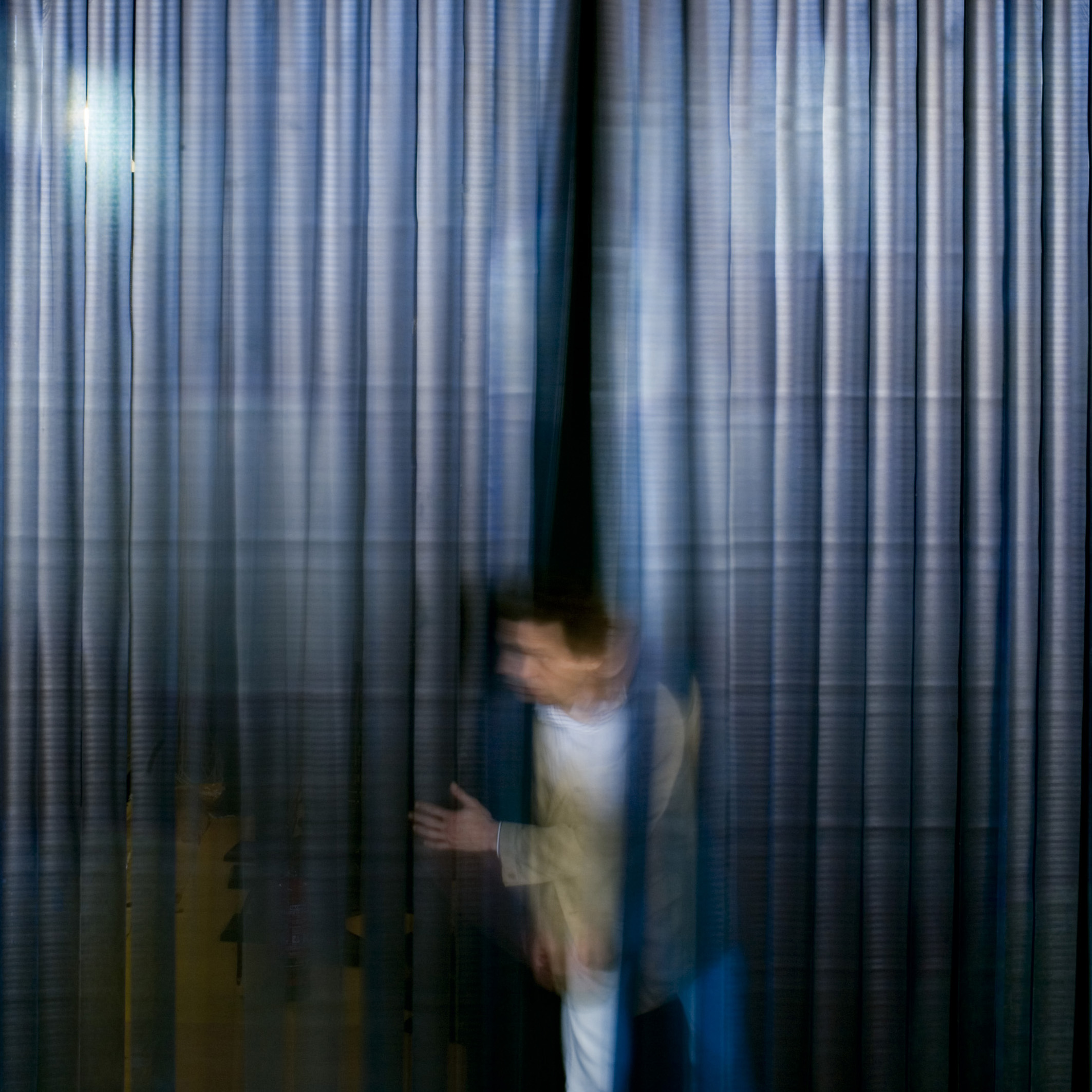
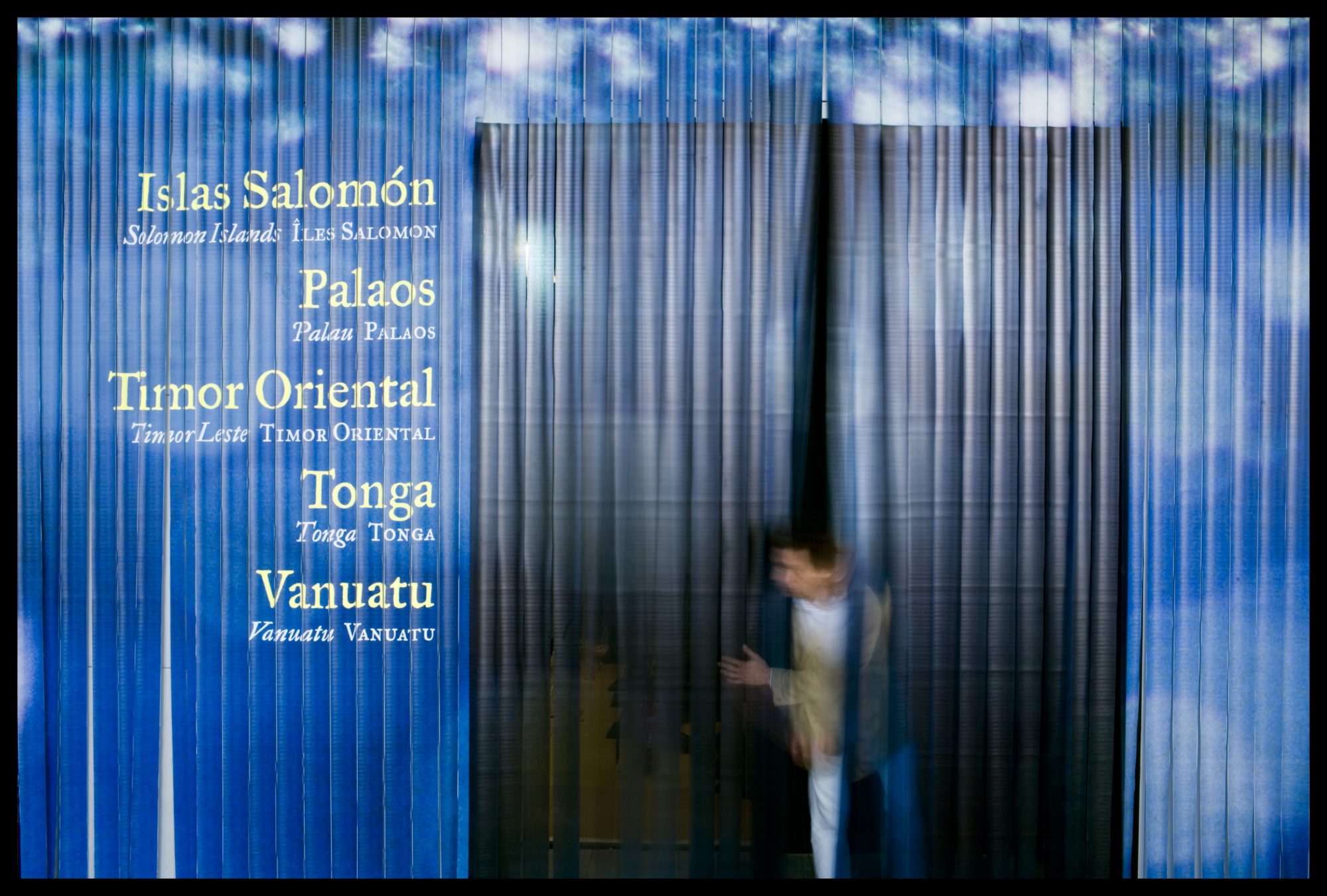
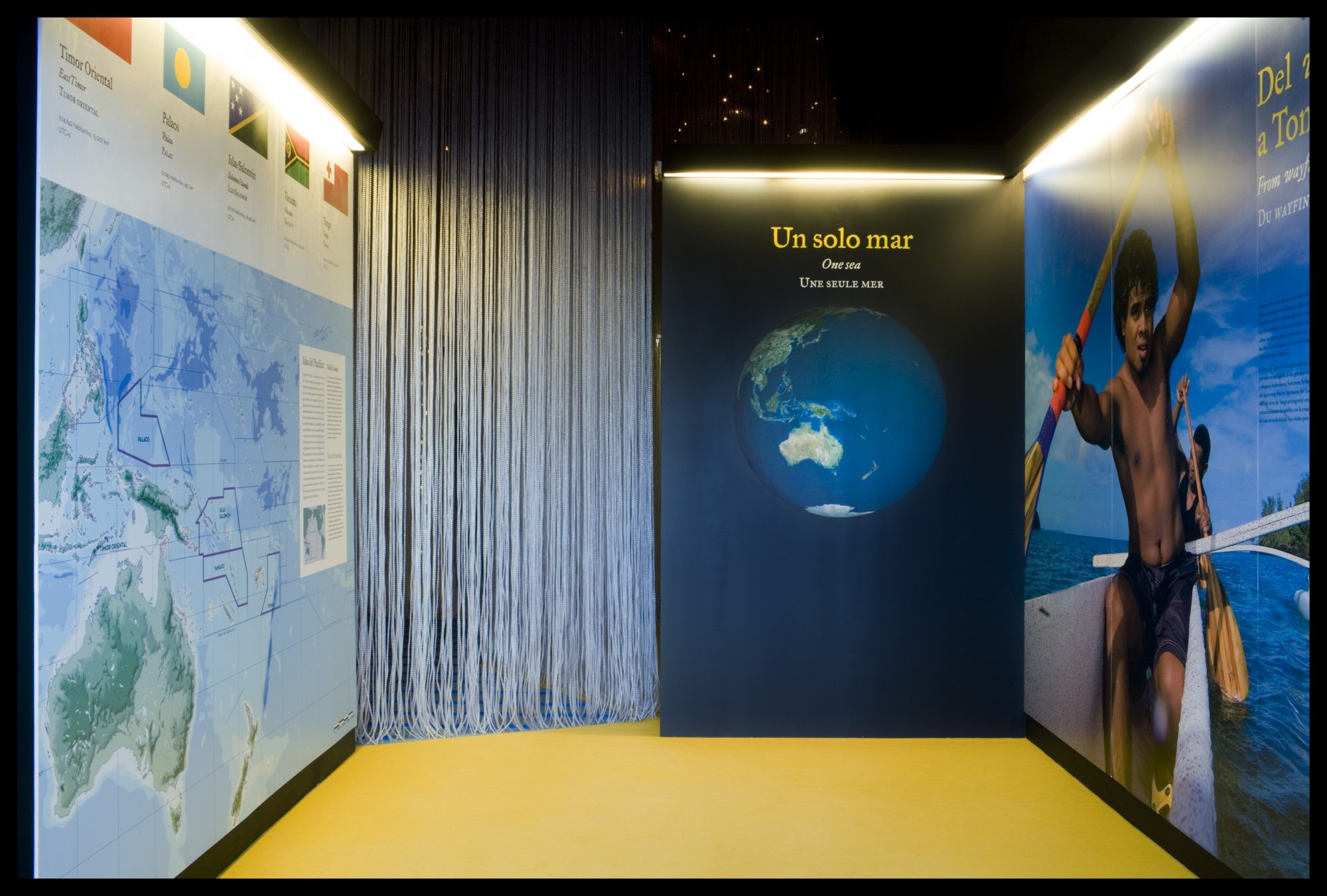
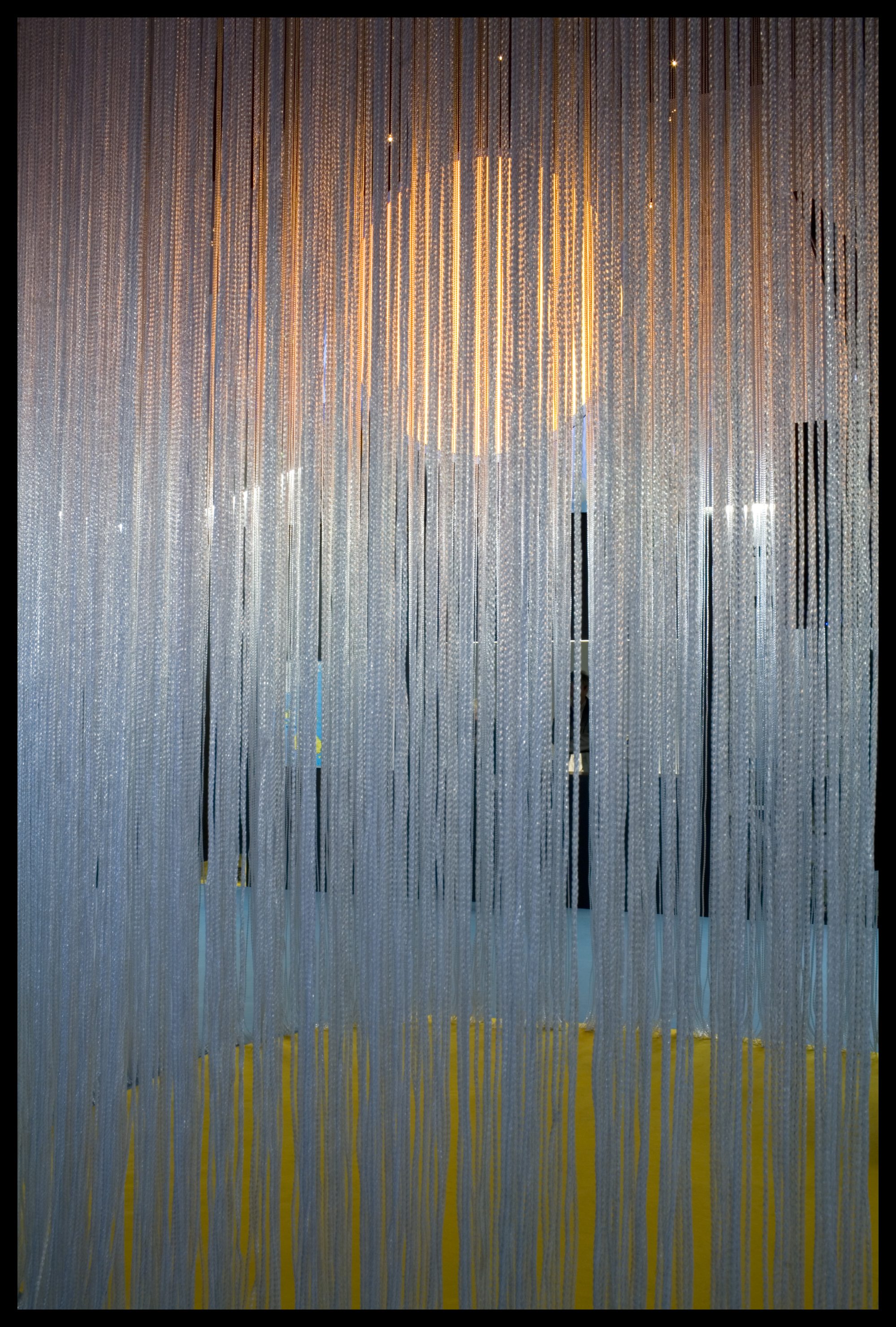
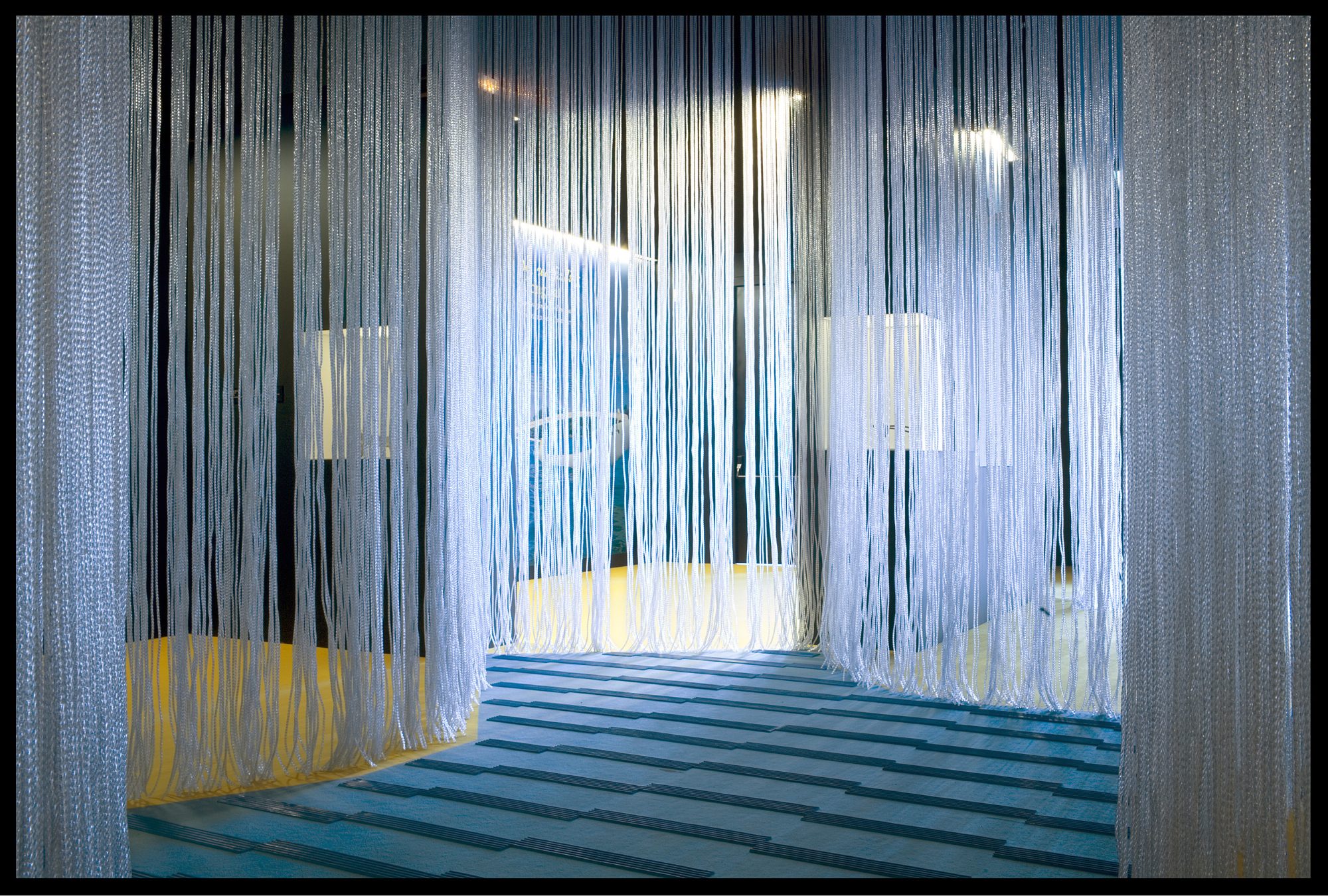
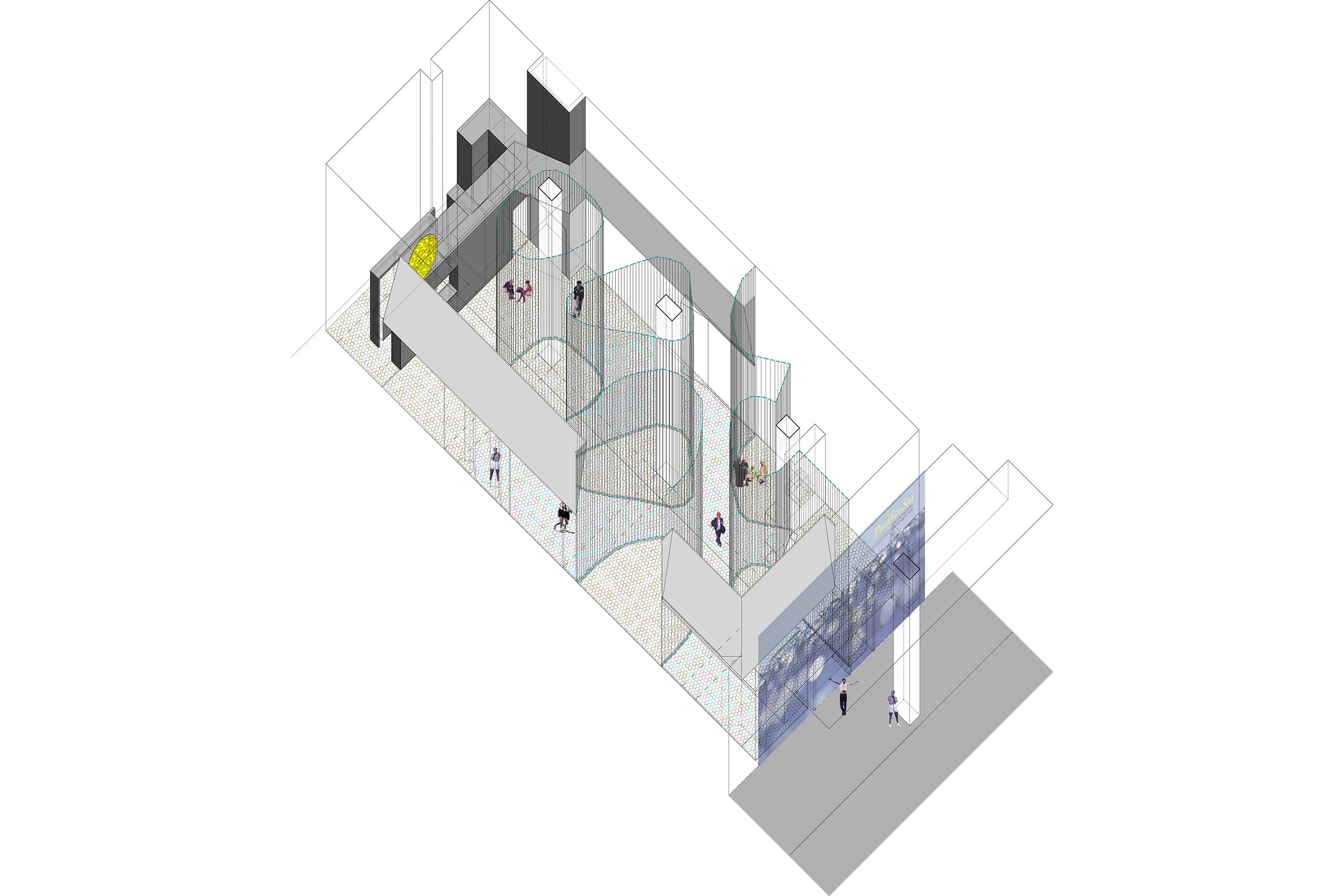
The pavilion functions as an environmental and navigable attraction. The facade is an invitation to dive into the ocean, reproduced in a curtain of translucent bangs that sway gently in the wind. After crossing the threshold, visitors find themselves in a lobby where the five participating countries are located and where instructions are given on how to navigate the pavilion through a form of navigation called wayfinding, guided by the natural elements and typically used by the inhabitants of the Pacific Islands.
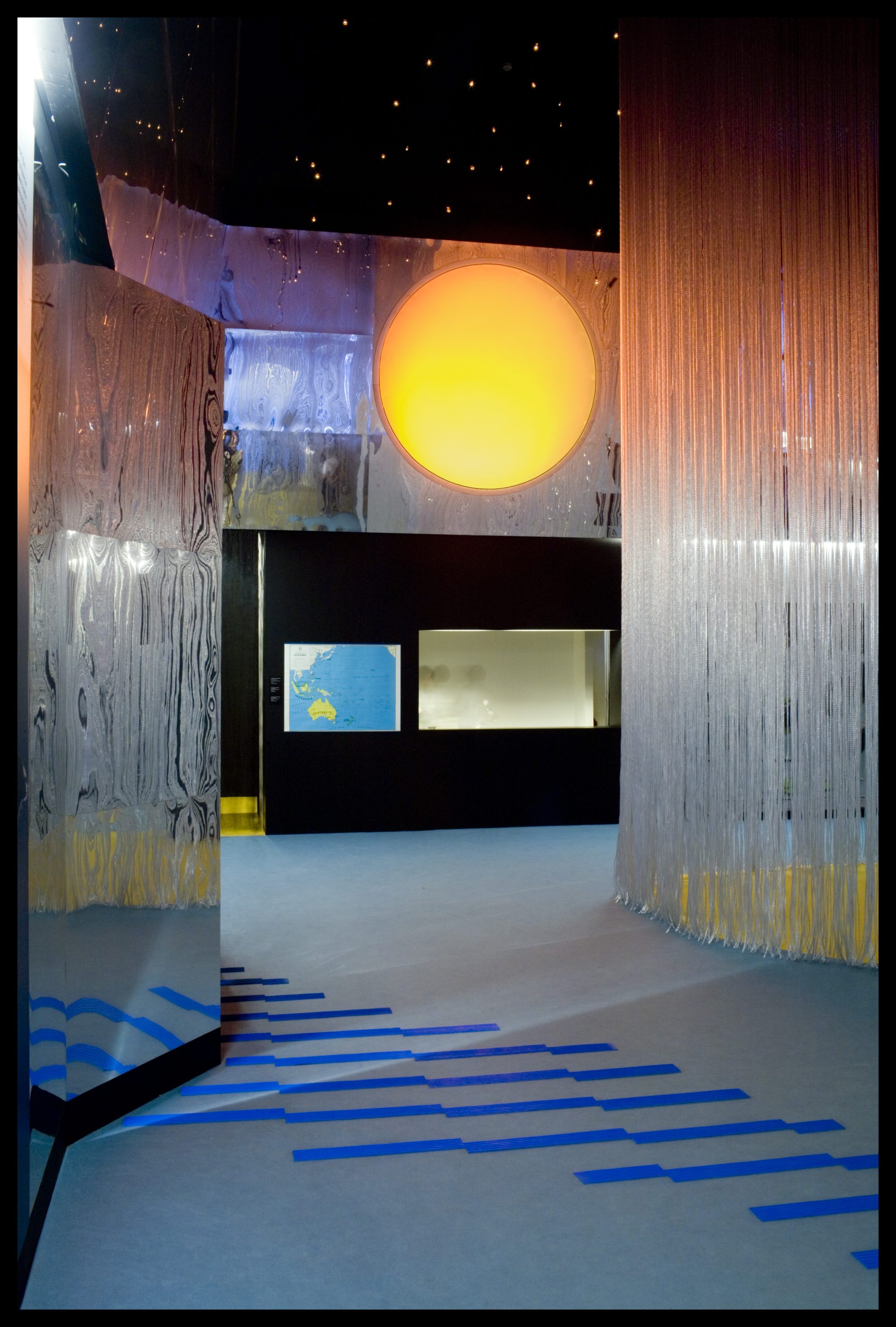
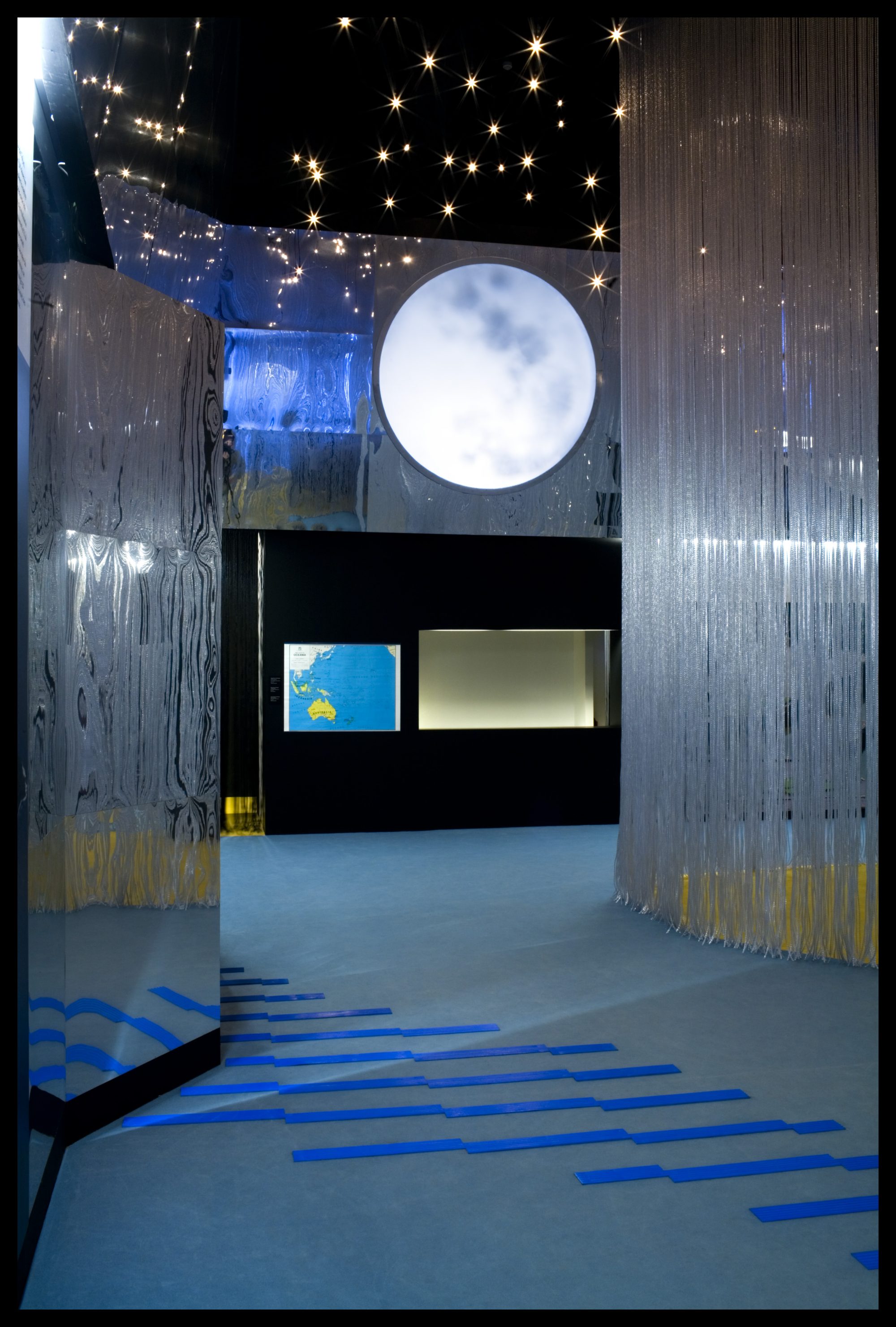
Visitors then enter a space that recreates the sea under a starry sky. In the background, a large celestial body alternates between the sun and the moon. The lighting reproduces night and day in a single space surrounded by a distant horizon that separates the sky and the sea. In the interior, curtains with translucent bangs unite what separates the horizon, as in a humid oceanic atmosphere.
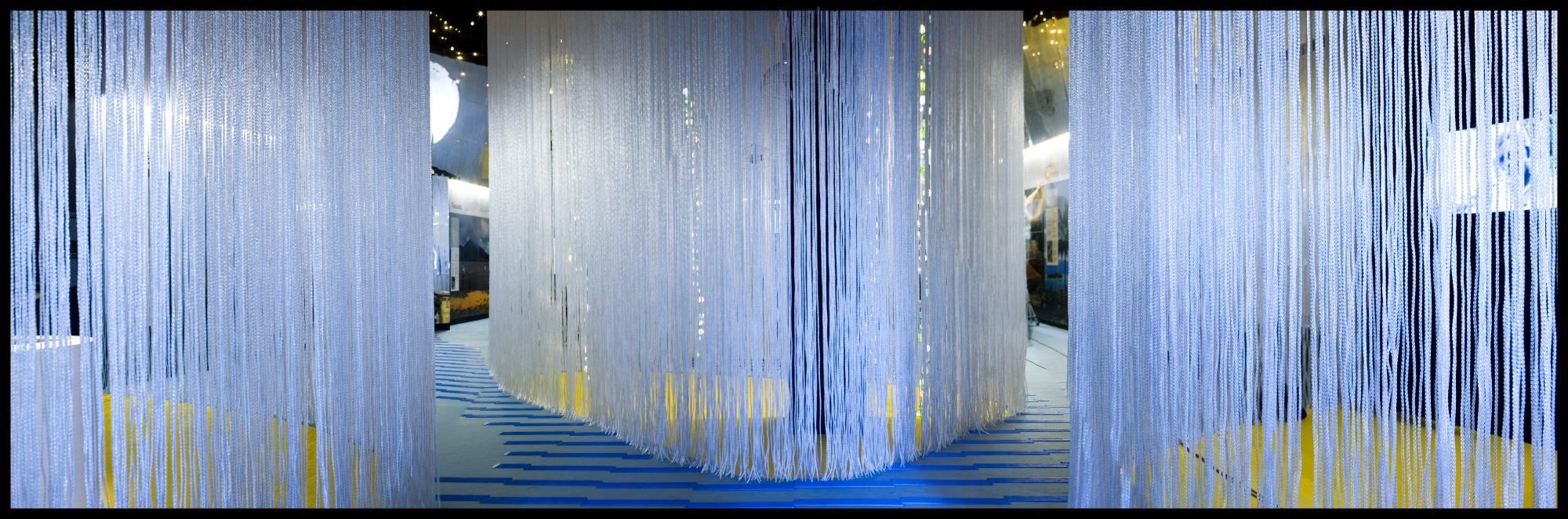
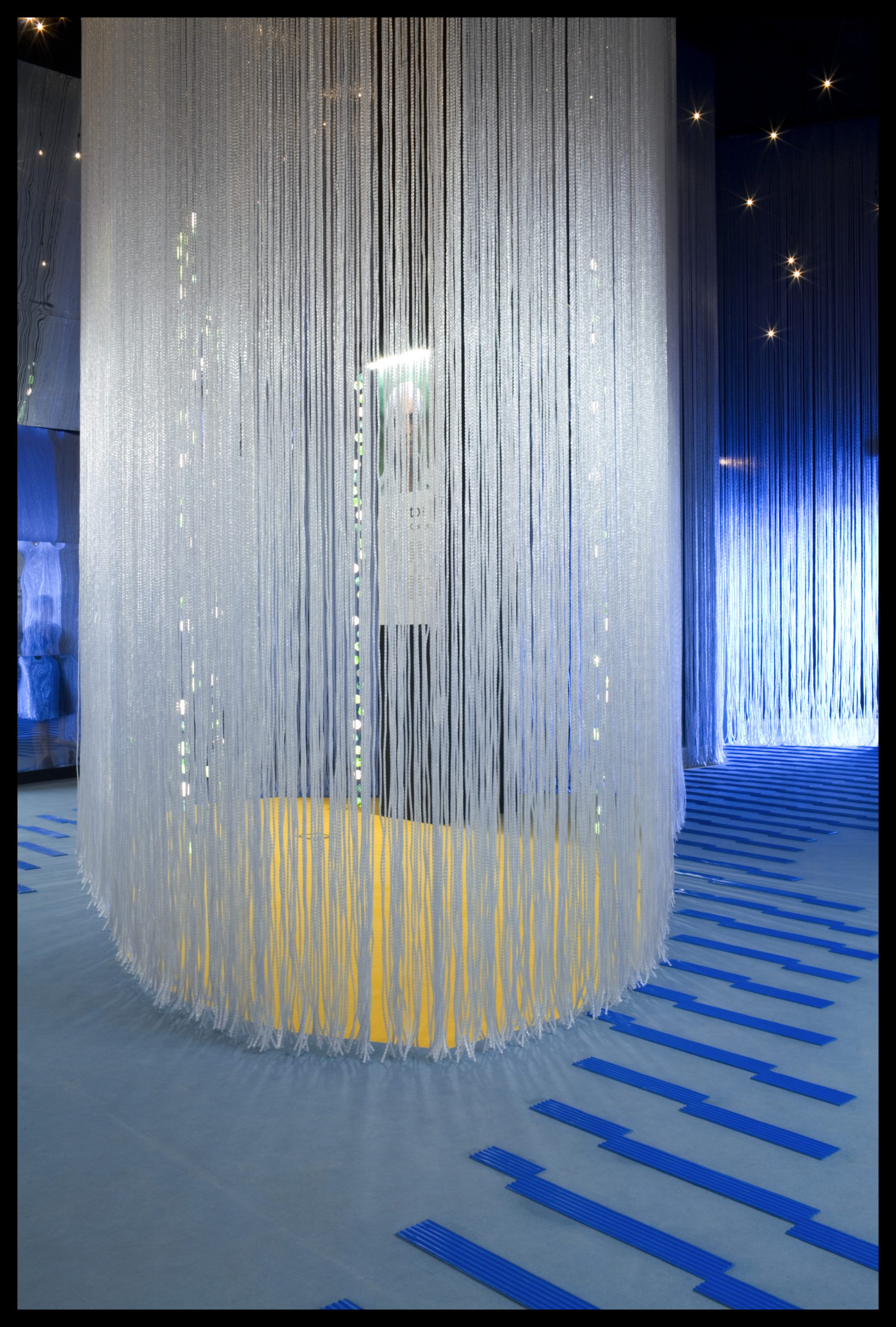
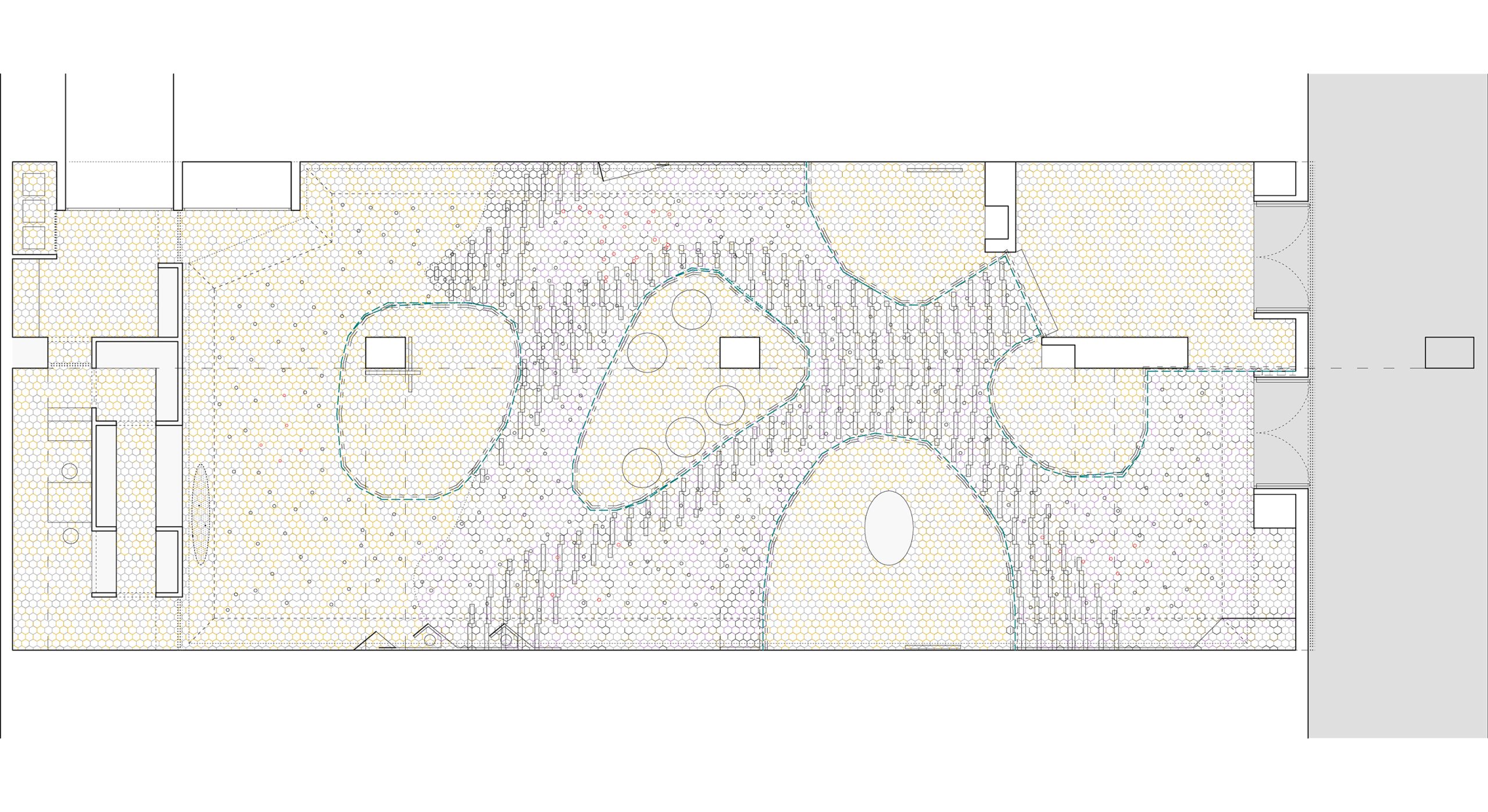
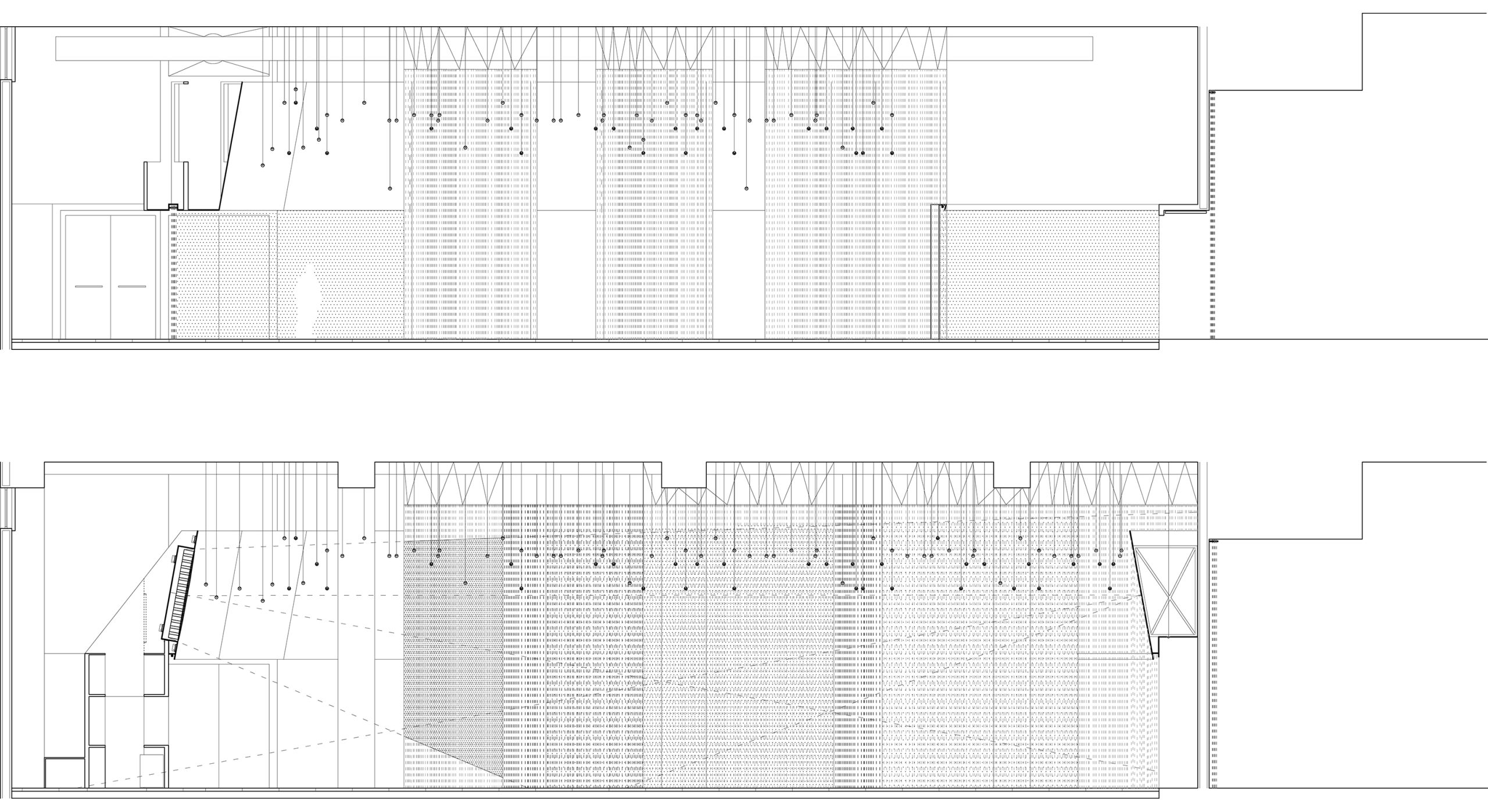
In the sea, five islands are enveloped by curtains seven meters high. A tactile element on the pavement indicates how to reach them. The five sites can be perceived as islands, as a mass of lush vegetation and as a cluster of rain huts. On the perimeter walls hang a series of mirrors that multiply the firmament and the reflection of the sun in the translucent bangs of the curtains, while creating the effect of a vast ocean dotted with islands.
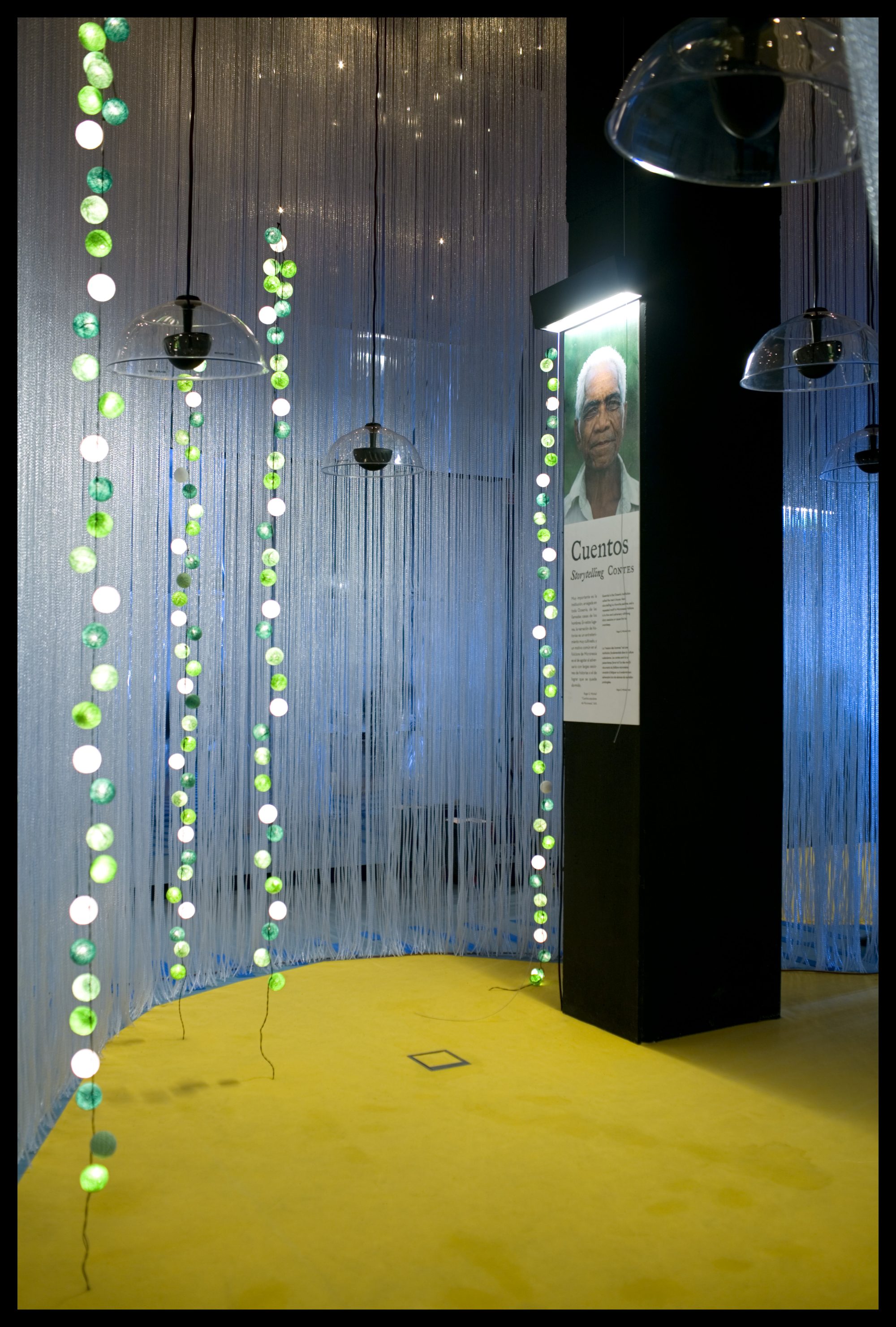
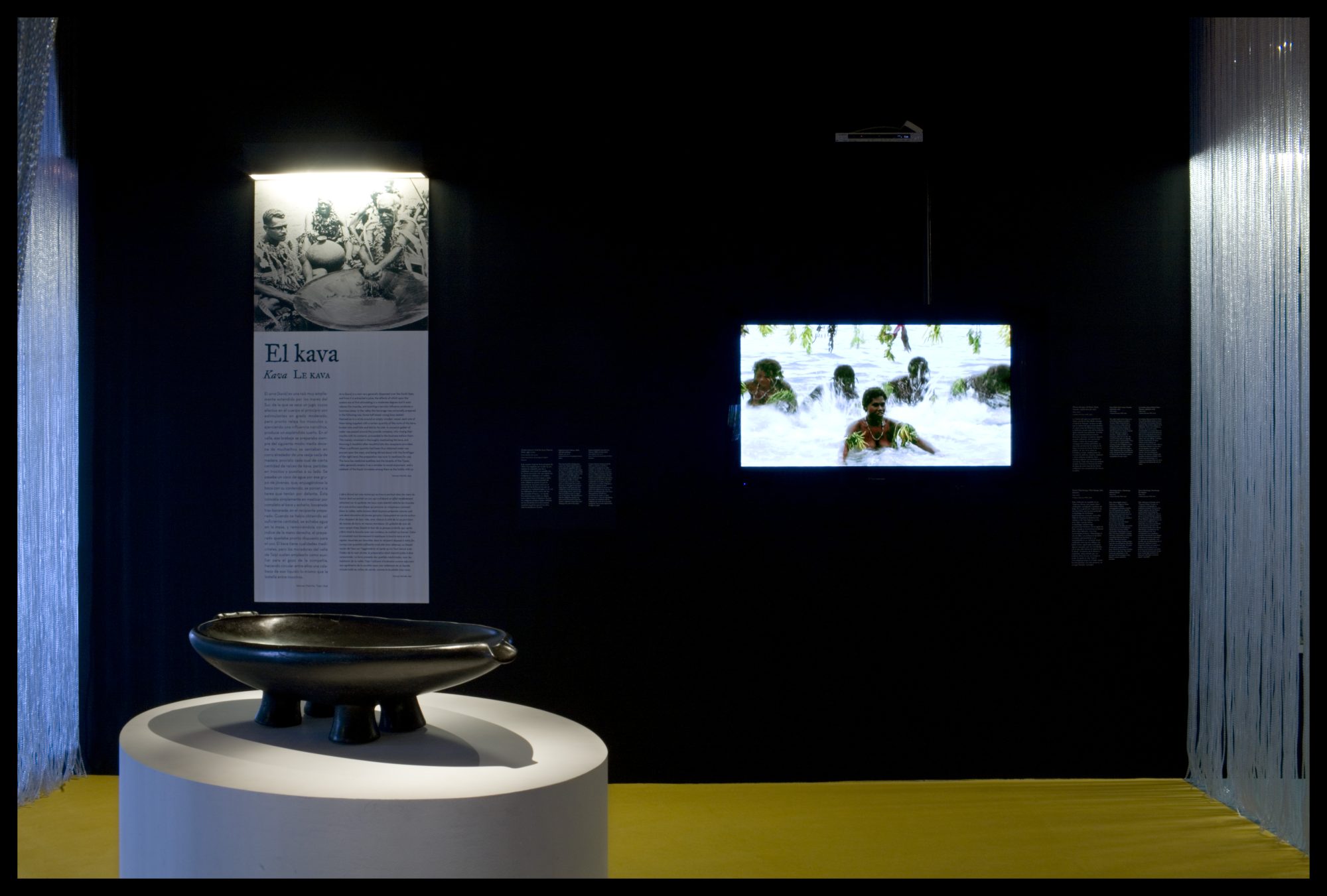
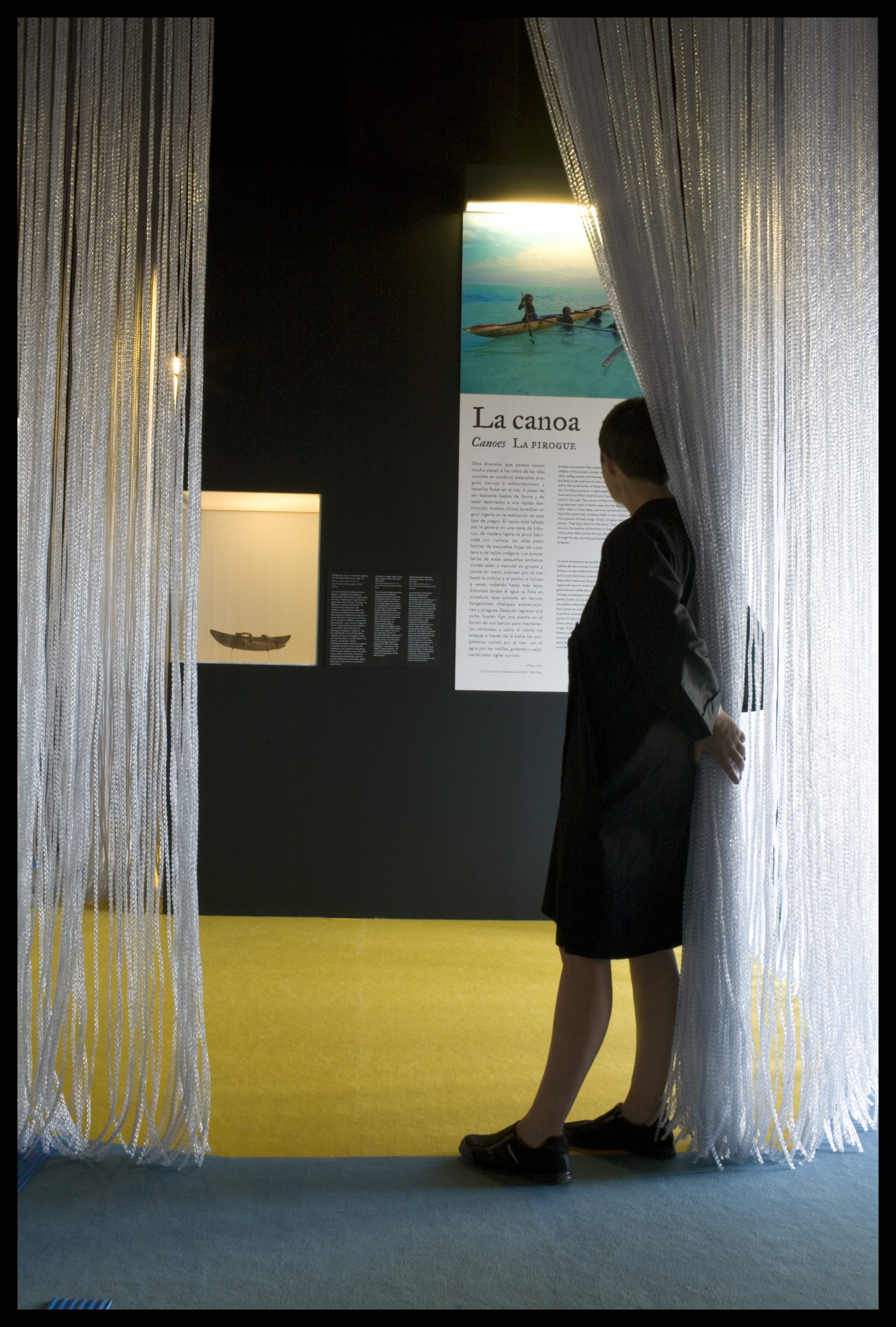
The islands themselves are dedicated to some of the typical themes of the life and culture of the Pacific Islanders: the kava, a drink associated with an ancestral ritual; the outrigger canoe, which they have used to navigate the Pacific since time immemorial; the coral reefs; the tales, myths and legends that form the basis of their rich oral tradition; and some of the videos, posted on Youtube, of the inhabitants telling their stories today.
The pavilion walls display a variety of examples related to the water culture of each of the participating countries: Tofua Island's volcanic crater in Tonga, an extraordinary natural container for collecting rainwater; ancient Lake Siwi on the ashes of Mount Yasur volcano in Vanuatu; the recent relocation of the capital of Palau to Babeldaob Island on the shores of Lake Ngardok; the freshwater ponds of East Timor's rice plantations; and the tranquil waters of Marovo Lagoon in the Solomon Islands, which as a breeding ground for five different languages illustrates the rich diversity of the Pacific Islands.